This regular bulletin includes messages from CEP partners and others which will have relevance for education providers across Cornwall. DfE RISE Conference: Raising Attainment – October 7th Opportunity from DfE Regions Group DfE are hosting a series of regional conferences in the autumn term as part of the universal RISE offer. The conferences will provide an opportunity to hear from ministers and senior advisors about their ambition for attainment. The events will be sector-led enabling the sharing of best practice on raising attainment, particularly for disadvantaged students, such as those from white working-class backgrounds. Topics will include KS3, particularly the transition from KS2, and literacy. There will also be time for networking and to hear from other school leaders about what can make the difference in raising pupils’ attainment. Invitations will be sent to all secondary school headteachers in early September, with the conferences taking place between 7 and 20 October (the SW conference is on October 7th) Academy trust CEOs and local authority directors of children’s education will also be invited to attend, although priority for places will be given to headteachers. Call for primary schools interested in being involved in research around intergenerational practices with care homes Request from HDRC Cornwall / University of Exeter A team at the University of Exeter are looking at applying for research funding around intergenerational practices in care homes and primary schools and their impact on wellbeing for children, older people and care providers. As part of this, they are looking for primary schools in Cornwall to take part as research participants, and would like to speak to a variety of care homes and schools about the possibilities and challenges of running an intergenerational after school activity programme between primary schools and care homes. They’re interested in speaking to all kinds of primary schools in Cornwall (and Devon and Somerset), whether or not you have previously been involved in an intergenerational project between primary schools/care homes before. If you’re interested in being involved, please email Luca Owenbridge on luca.owenbridge@cornwall.gov.uk and Becky Whear on r.s.whear@exeter.ac.uk Cradle to Classroom parental transition support Opportunity from MTPT The MTPT (Maternity Teacher, Paternity Teacher) project are running a Cradle to Classroom programme of parental transition support for colleagues on, and returning from parental leave, and there are a limited number of free places available for people in Cornwall, funded by South West Teaching School Hubs. They are holding a free information event on Tuesday 9th September, 09:00-09:30, on Zoom: https://us06web.zoom.us/meeting/register/Z2Fi3sSpQrGcC7hqvnYqQg#/registration If this time doesn’t work for you, more information is available on their website. A conversation about ‘Good Food for One and All’ with schools in Cornwall Opportunity from Sustainable Food Cornwall Sustainable Food Cornwall are working with TastEd, a charity dedicated to support food education in schools, and want to connect with teachers and leaders who are committed to a shared goal of maximising the value of good food in our education system. They are hosting a Feast Night event at Nancarrow as a fundraiser for TastEd on Thursday 23rd September, the evening before next month’s CAPH conference, which may be of interest to you or colleagues; there will be a number of teacher discounts available. Nancarrow and Sustainable Food Cornwall have also suggested hosting a private conversation for a group of educators from Cornwall about how ‘Good Food for One and All’ can contribute to our shared goals in a meeting space at Nancarrow earlier that evening – please let danielle@sustainablefoodcornwall.org.uk know if you’d be interested in joining such a conversation. Flourishing Leaders Programme Opportunity from OneCornwall OneCornwall are delighted to be recruiting to a new Flourishing Leaders Programme, which will start this Autumn term. These leadership programmes seek to provide a transformational space for growth for leaders at all levels across our school system. More information is available in this brochure; if you are interested, please complete this form: https://forms.office.com/e/FQ2HJPcLHC CAPH Conference – Culture, Ethos and Connection – Friday 24th October 2025 Opportunity from CAPH CAPH’s conference themed around Culture, Ethos and Connection is rapidly approaching. With lots of great speakers from Cornwall and across the country, the conference is taking place at the Eden Project – you can find out more and book tickets on their website. SEND centres of excellence planning update Update from Rachel Delourme at Cornwall Council Rachel and the team at Cornwall Council wanted to let you know they have had a good response to an invitation to join a group to develop a deeper understanding of the range of inclusion models being used in other parts of the country and internationally and to develop options for appraisal. The group is representative of MATs, standalone and maintained schools including mainstream special and AP. There will be opportunities for a wider group of stakeholders to be engaged as the project develops. This will be through CEP, SEND Board and other bodies that represent children young people and parents/carers. Ultimately they are working towards taking an options paper to CEP, SEND Board, and through SEND system governance towards the second half of the autumn term which allow them time to understand, respond to and incorporate the requirements of the pending government SEND reforms.
Supporting specialist provision through the SIAG service
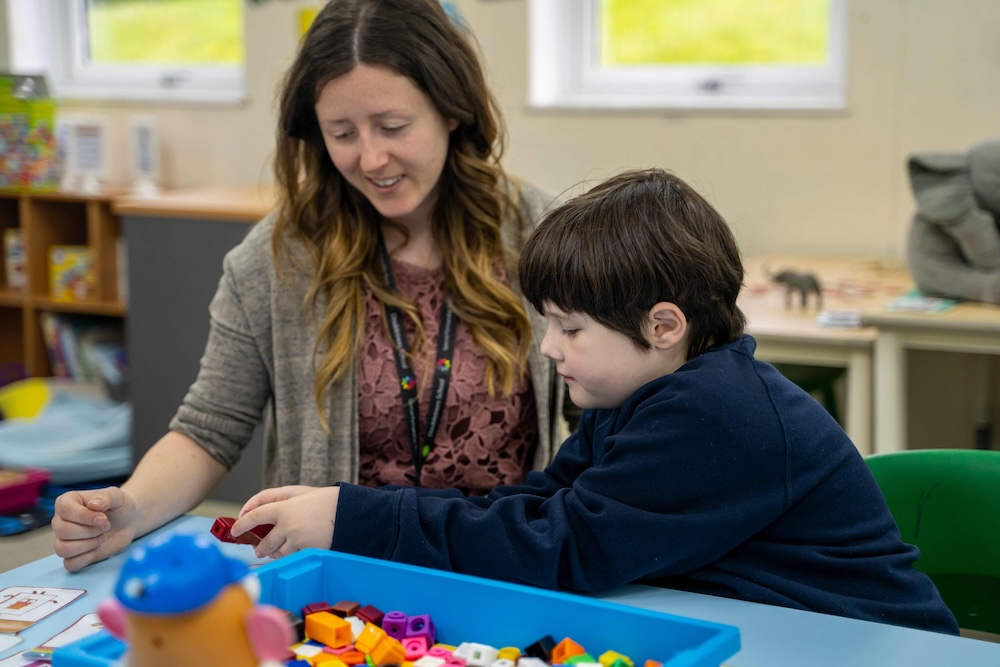
Emilie Warren SEND Outreach Operations Manager Special Partnership Trust The Specialist Information Advice and Guidance (SIAG) service, funded by the Delivering Better Value initiative and commissioned by Cornwall Council, has been an exciting and innovative project aimed at enhancing Special Educational Needs and Disabilities (SEND) provision in mainstream schools across Cornwall. This innovative service, delivered by the Special Partnership Trust, has proven that schools are looking for solutions that bring together knowledge and guidance on Universal Provision and has laid the foundation for a similar outreach service being developed in Devon. Background and Objectives Launched in March 2024, the SIAG service was designed to address the increasing demand for SEND support in mainstream schools. With a significant rise in Education, Health, and Care Plan (EHCP) applications and a growing number of exclusions, there was a clear need for a service that could provide practical, on-the-ground support to schools. The primary objectives set out by Cornwall Council were to: Decrease the number of EHCP requests by enhancing the capacity of schools to meet students’ needs. Reduce exclusions by supporting schools in managing challenging behaviours and creating inclusive environments. Increase staff confidence and knowledge in delivering quality first teaching and universal provision. Implementation and Approach The SIAG service employed a team of specialist SEND practitioners who worked directly with mainstream schools and a SEND Outreach Operations Manager to run the service. The service was structured around a carefully managed request-for-support process, overseen by a panel comprising representatives from Special Partnership Trust, the Local Authority, School Effectiveness, and SEND services. Schools received up to three days of support from a specialist practitioner, focusing on strengths-based approaches, peer-to-peer modelling, and practical demonstrations. The service was delivered in six rounds, with schools applying for support through the local council’s platform. The applications were reviewed by the panel, and schools were selected based on their needs and the suitability of the SIAG service to address those needs. Over the course of the project, the SIAG team adapted their approach for delivery based on feedback and evolving needs, moving from a formal, documentation-heavy process to a more iterative and flexible model. Schools highlighted the value of having an external professional provide support and reinforce messages from their SENCOs… The SIAG service was seen as a crucial link between SEN services and mainstream education. Impact and Successes The SIAG service had a profound impact on the schools it supported. Here are some of the key successes: Increased Staff Confidence: One of the most significant outcomes was the increase in staff confidence. Teachers and support staff reported feeling more equipped to meet the needs of SEND students, thanks to the practical strategies and hands-on support provided by the SIAG practitioners. The non-judgmental, peer-to-peer approach was particularly appreciated, as it created a safe space for staff to learn and implement new strategies. Holistic Support: The service’s holistic approach, which included environmental audits, staff training, and whole-school strategy embedding, was highly effective. Schools appreciated the comprehensive nature of the support, which addressed multiple aspects of SEND provision rather than focusing on individual students. Positive Feedback: Feedback from schools was overwhelmingly positive. Many schools highlighted the value of having an external professional provide support and reinforce messages from their SENCOs. The SIAG service was seen as a crucial link between SEN services and mainstream education, supporting schools to understand the strategies shared, implement and adapt them for their school and classrooms. Resource Hub: The creation of the SIAG SEN Resource Hub on SharePoint was another interesting development despite other platforms being available. The hub provided schools with access to a wealth of resources, including links to local authority and NHS teams, recommended strategies, and training materials. The hub was well-received and continues to be a valuable tool for schools. Challenges and Learnings While the SIAG service was a success, it also faced some challenges. The short duration of the project made it difficult to measure long-term impacts on EHCP applications and exclusion rates. Additionally, the need for more robust collaboration with local authority SEN teams was identified, and a more effective structured approach to the application/ panel process. This would ensure that schools that did not meet requirements for SIAG still received appropriate support and that the panel could make more informed decisions. Future Directions Building on the success of the SIAG service in Cornwall, the Special Partnership Trust is developing a similar outreach service in Devon and SIAG in Cornwall is now a traded model which can be bought by schools and Trusts. This new service will incorporate the learnings from the SIAG project and offer a more comprehensive range of support, including individual pupil support and MAT SLA’s. The goal is to create a sustainable model that can continue to enhance SEND provision and support schools in delivering inclusive education. In conclusion, the SIAG service has demonstrated the power of innovative, collaborative approaches to supporting SEND in mainstream schools. By empowering staff, fostering inclusivity, and providing practical, hands-on support, the SIAG service has made a lasting impact on the schools and students it served. The lessons learned from this project will undoubtedly inform and inspire future initiatives in SEND education.
Connection and Collaboration Through CAPH
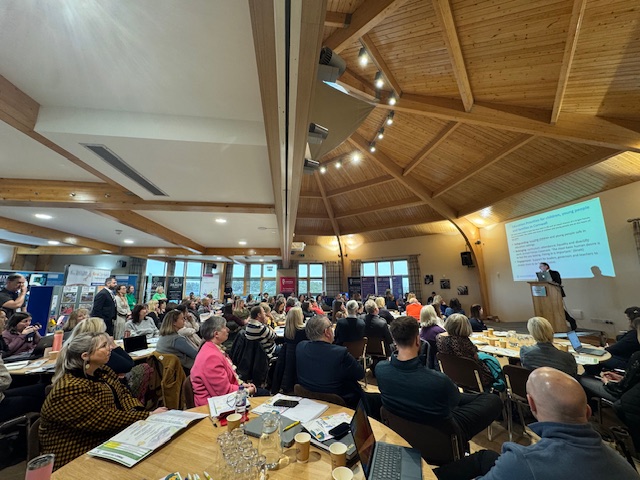
Emma Kerr Strategic Lead Cornwall Association of Primary Heads At Cornwall Association of Primary Heads (CAPH), we believe that connection is not a peripheral benefit of school leadership – it’s a core driver of positive change. In a region where schools often face rural or coastal isolation and are spread across a complex landscape —including maintained schools, multi-academy trusts, and federations—collaboration is essential both practically and professionally for support, shared learning, and sustainable leadership. Professor Tanya Ovenden-Hope’s research into coastal and rural education has shown that isolation can significantly affect leadership sustainability and staff retention. At CAPH, we understand this challenge well. We are a Co-operative Community Interest Company dedicated to supporting and improving the education, health, and care of children in Cornwall by championing excellence. Our mission is to support school leaders and member schools as a catalyst for innovation, facilitating meaningful connection, collaboration, and partnership across the education sector. Through this work, we aim to raise the aspirations and achievements of both pupils and staff. As Nicholas Christakis outlines in his research on social networks, the connections between individuals profoundly influence behaviours, attitudes, and outcomes—underlining why fostering strong professional networks within education is crucial for driving positive change. At CAPH, this understanding shapes our work and our four core aims: Promote Collaboration – Equipping leaders to lead with confidence and impact Provide Sustainability – Offering practical, lasting support to enable long-term success Support Belonging – Creating inclusive communities where every school feels valued Educate for Sustainability and Belonging – Inspiring school leaders to embed sustainable, inclusive practices. These aims are not simply aspirational – they are grounded in research and real-world need. The Education Endowment Foundation (EEF) identifies collaborative learning and peer support for teachers as strategies that, when implemented well, have significant positive impact on pupil attainment and staff development. Likewise, the Chartered College of Teaching advocates for teacher collaboration as a key driver of professional learning and effective practice. This is supported by findings from Ofsted, which has recognised that strong internal and external collaboration often underpins the most successful school improvement journeys. Strong internal and external collaboration often underpins the most successful school improvement journeys On an international scale, the Organisation for Economic Co-operation and Development (OECD) – a global body that analyses education systems – has shown through its TALIS and PISA surveys that schools with embedded cultures of collaboration tend to perform better in terms of staff morale, leadership quality, and pupil outcomes. The UK regularly participates in these studies, and findings often inform national education policy, offering a useful mirror for our own system. As the Center for Creative Leadership highlights, boundary-spanning leadership – the ability to forge connections across teams, sectors, and systems – is a vital advantage in today’s complex educational landscape, particularly for leaders navigating the layered challenges of rural and coastal contexts. At CAPH, we create the conditions where this kind of collaboration can flourish – through trusted networks, shared professional development, and peer support that is grounded, purposeful, and values-led. This feeds in to wider work across the region. CAPH is proud to be a stakeholder of the newly formed Cornwall Education Partnership (CEP), representing the views of our members, establishing shared priorities and collaboratively setting the education strategy for the county in order to drive improvement within this forum. As we look to the future, CAPH is developing new partnerships that further support innovation and excellence in education. One such area is our emerging involvement with the Penryn Creativity Collaboratives and CCE (Creativity, Culture and Education) – initiatives focused on embedding creativity at the heart of curriculum, pedagogy, and leadership. CAPH is excited to explore how this approach aligns with our mission to educate for sustainability and belonging, particularly in contexts where creative opportunities may be limited by geographical or economic constraints. You can find out more about this, and much more, at our annual CAPH Conference at the Eden Project on Friday 24th October 2025. With a theme of Culture, Ethos and Connection, and with keynote contributions from Dame Alison Peacock, Christine Counsell, Rachel Higginson and Clare O’Sullivan, the event will provide space to reflect, reconnect, and move forward with renewed clarity. Our hope is that every delegate leaves not only inspired, but equipped – with practical tools, shared insight, and the support of a wider professional community. Find out more and book your place at the CAPH Conference here and find out more about relevant events happening within and outside Cornwall on the CAPH calendar . Further Reading Ovenden-Hope, T. (2020). Levelling Up the Forgotten Third: Coastal and Rural Education in England; Educational Isolation in England: Understanding Place-Based Challenges for Teacher Recruitment and Retention in Coastal and Rural Schools – Plymouth Marjon University Repository Education Endowment Foundation (EEF), Collaborative learning approaches | EEF The Organisation for Economic Co-operation and Development | OECD, TALIS 2020 UK Country Report: OECD TALIS Chartered College of Teaching, Evidence-Informed Practice

Creating a Culture of Belonging at Treviglas Academy
Rebecca Drake Assistant Headteacher Treviglas Academy, part of The Roseland Multi Academy Trust My teenage daughters delight in showing me the memes that they’ve seen that supposedly sum up the school experience: the one that sticks with me is that school stands for ‘Six Cruel Hours Of Our Lives’. Two things strike me about this: firstly, perhaps only from the perspective of an adult can we truly appreciate the system of education that we are privileged to have in the UK; secondly, if the hours spent at school are really perceived as ‘cruel’ do the students in our schools really feel a sense of belonging? It was this idea of creating a culture of belonging that became the focus of Treviglas Academy’s work over the last two years. Trevigas Academy’s Ofsted inspection in March 2023 highlighted that our students didn’t feel part of the school. We seemed to be engaged in a battle between the community and the school in which only 47% of parents would recommend us. It was this that was harder to take than the Ofsted outcome. We knew that exam results were good (above the national average that year) but yet students didn’t like coming to the school. The new Headteacher, James Rogers, set out on a mission to change this culture. His brand of total honesty, authenticity and approachability meant that the first school presentations were delivered in a way unlike the corporate feel that many schools are moving towards. That doesn’t mean that there was any less professionalism or ambition; instead, he represented a believable honesty about what we wanted to achieve as a school, and what we would aspire to do for the students in our care. The same approach was taken with our students: James led the behaviour culture to have simplicity yet predictability of consequence. Students felt safe knowing the boundaries, and knowing that when they crossed them, they would have to accept the consequences but that these would be delivered with no less compassion and support than any other aspect of the school life. We joke in our leadership team that we’re not very good at remembering names but, importantly, we all know our students; we know their faces and importantly we know that every single one of them has a strength. This might be the achievement of the top grades in GCSEs and applications to Oxbridge; the courage to stand up and sing a solo despite being terrified; playing for the girls’ football team for the first time or representing the school at the basketball regional finals; sharing your favourite book; the kindness to look out for someone in the playground who is struggling; the ability to smile and say hello and ask how another person’s day is going. School outcomes go far beyond Progress 8 measures and league tables and it became James’ mission to lead a school that took the Trust’s values of kindness, ambition and responsibility to be more than just words – they permeated everything that we needed to do so that all students felt like they belonged. It was vital that this culture was felt in the classroom: we wanted a culture of belonging but within this a culture of learning. Each member of the Leadership Team was given a clear area of responsibility, an area that matched our strengths and passions, but with this an accountability for the outcomes. We were trusted to lead in our roles, and to encourage others to do the same, so that all staff felt a sense of belonging, encouraged to take risks and be creative, in the shared vision about what we were trying to achieve. It was the students who truly flourished. They excelled at showing off their school, not the buildings (which are in the process of much-needed repair) but Treviglas Academy, the school that they went to and felt a part of. So, when the phone rang on the morning of the 3rd March, there was the obvious expected nervousness, but also a sense of excitement. Would the Ofsted team see the culture that we had tried to embed? When students were given the opportunity to talk to outsiders in a high stakes accountability process, would they say that they thought that they belonged? As the parental survey reached 85% recommending the school, we felt confident that our parents were behind us. However, it was the students who truly flourished. They excelled at showing off their school, not the buildings (which are in the process of much-needed repair) but Treviglas Academy, the school that they went to and felt a part of. The Ofsted report noted that the ‘school has high expectations of pupils’ conduct. They balance these expectations with warmth and mutual respect… increasing numbers of pupils make good academic progress.’ But, perhaps the most important line was that ‘all pupils feel a sense of belonging, so they are able to achieve well.’ I am not naive enough to think that teenagers will wake up at 6.30am each morning, jump out of bed with joy at the prospect of going to school. However, through creating a culture of belonging, students may not consider the hours ‘cruel’ but instead look back with a feeling that at school, regardless of their talents, and their GCSE outcomes, this was a place where they felt that they belonged. At the beginning of our journey two years ago, we took the courage to say that this was the outcome that we wanted for all of our students. That is not to dismiss the importance of academic outcomes, sporting and performance success, but these can now be greater developed sitting within a culture where everyone feels that they belong.